The $20k Used Car Bargain Isn't an SUV. It's a Hot Hatchback.
Used car buyers on a $15k-$20k budget face a defining dilemma: splurge on a high-spec, fun-to-drive performance hatchback like the Volkswagen Golf GTI, or settle for a base-model practical SUV such as the Honda HR-V. The default choice for many is the HR-V, assuming SUV space equals better value—but this overlooks the Golf GTI’s hidden advantages: premium features, driving engagement, and a total package that outperforms the HR-V in daily usability for most buyers. This isn’t a battle of size vs. speed; it’s a clash of "quantity" (SUV space) vs. "quality" (GTI’s high-spec experience). By dissecting features, ownership costs, reliability, and real-world utility, we uncover why the GTI is the unsung used car bargain—and why the HR-V’s space advantage often masks a lack of value.
High-spec features vs. basic utility reveal the GTI’s disproportionate value. A 3-5 year-old Golf GTI (2019-2021) in this budget typically comes loaded: adaptive DCC suspension, heated leather sport seats, a 10-inch touchscreen with Apple CarPlay/Android Auto, dual-zone climate control, and a 228-hp turbocharged engine paired with a 6-speed manual or DSG dual-clutch transmission. The same budget buys a base-model Honda HR-V (2019-2021) with 141 hp, a 5-inch non-touchscreen radio, manual air conditioning, fabric seats, and no advanced driver assists. Think of it as choosing between a fully furnished luxury apartment and a sparse studio—both have four walls, but the GTI’s standard features enhance every drive. The HR-V’s 39.3 cubic feet of cargo space (vs. GTI’s 22.8) seems like a win, but for most buyers (singles, couples, small families), the GTI’s cargo is sufficient, and its performance and comfort features deliver daily joy the HR-V can’t match.
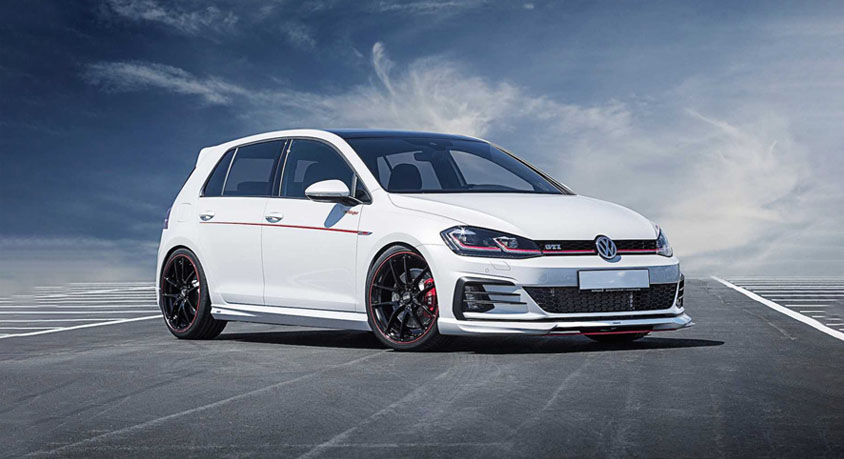
Driving dynamics and ownership experience highlight the GTI’s long-term appeal. The GTI’s turbocharged engine and sport-tuned suspension turn commutes into enjoyment, with 0-60 mph in 5.9 seconds—nearly 3 seconds faster than the HR-V’s 8.6 seconds. Its adaptive suspension balances sporty handling and ride comfort, while the HR-V’s soft suspension feels numb and disconnected. Reliability, a key used car concern, favors the HR-V (J.D. Power 2024 U.S. Vehicle Dependability Study: 86 PP100 vs. GTI’s 105 PP100), but the GTI’s issues are mostly minor (infotainment glitches, minor turbo lag) rather than catastrophic. Maintenance costs tell a similar story: the GTI averages $800/year vs. HR-V’s $650/year, but the price difference is offset by the GTI’s lower depreciation—retaining 45% of value after 5 years vs. HR-V’s 42%. For buyers who value driving pleasure over maximal cargo, the GTI’s slightly higher costs are a small price for a vastly more engaging experience.
Real-world utility and hidden traps expose the HR-V’s limitations. The HR-V’s "Magic Seat" folds flat for larger items, but its base-model lack of features becomes frustrating: no backup camera (pre-2021 base trims), no blind-spot monitoring, and a weak engine that struggles on highways. The GTI, by contrast, comes standard with safety features like adaptive cruise control, lane-keep assist, and automatic emergency braking (on 2020+ models), plus creature comforts that make long drives bearable. The HR-V’s biggest trap is "space illusion": most buyers rarely use maximum cargo capacity, but they use seat comfort, infotainment, and performance every day. The GTI’s turbocharged efficiency (25 MPG city/34 MPG highway) also matches the HR-V’s (28/34), eliminating the "SUV is more efficient" myth.
The verdict hinges on defining "value": For buyers who prioritize daily driving enjoyment, premium features, and long-term satisfaction, the used Golf GTI is the clear bargain—its high-spec lineup delivers more usable value than the HR-V’s one-note space. For those who regularly haul large items, transport multiple passengers, or prioritize minimal maintenance, the HR-V makes sense—but it comes at the cost of driving engagement and comfort. Most used car buyers choose the SUV out of habit, not need, overlooking the GTI’s rare combination of performance, features, and reliability in this budget. The better used car bargain isn’t the one with more cubic feet—it’s the one that makes every drive feel worth it.
latest news

- Dec,28,2025
- What If the Loudest Thing About a 155 mph Car Was Your Heartbeat?
- Automobile
- Most drivers accept road noise as an unavoidable side effect of speed—wind howling past mirror...
- Dec,26,2025
- The Hatchback vs. SUV Debate Is Over. Here’s Who Should Buy Each
- Automobile
- Car buyers often follow trends instead of their daily routines, picking an SUV for its perceived pra...
- Dec,24,2025
- Why the Hot Hatch (Still) Humiliates the Hot SUV
- Automobile
- The performance car market is trapped in a misperception: that taller ride heights and SUV badging c...
- Dec,22,2025
- Most People Think EVs Are Greener—But RAV4 Hybrid vs. ID.3 Truth Shocks
- Automobile
- Eco-conscious car buyers often default to electric vehicles (EVs) as the "greener" choice, assuming ...