For Women Drivers, ‘Easy to Drive’ Isn’t About Size. It’s About This.
Women car buyers often equate "safer feeling" with taller SUVs like the Kia Seltos, assuming elevated seating and larger size translate to easier, more secure driving. But the Honda Fit, a compact hatchback, challenges this assumption by addressing the real pain points women prioritize: effortless entry/exit, minimal blind spots, stress-free city maneuvering, and thoughtful storage. This isn’t a battle of "safe vs. unsafe"; it’s a clash of perceived security vs. practical ease—two priorities that often misalign. By dissecting the features that actually simplify daily driving for women, we uncover why the Fit is the unsung hero of accessible, low-stress mobility—and why the Seltos’s "safe feeling" comes with hidden tradeoffs.
Entry and exit convenience, a daily litmus test, highlights the Fit’s user-centric design. The Fit’s seat height (28 inches from the ground) aligns with the average woman’s hip height, allowing easy sliding in and out without climbing up or lowering down—critical for those wearing dresses, carrying bags, or navigating with kids. The Seltos’s 33-inch seat height requires a noticeable step-up, which becomes cumbersome with groceries, purses, or child carriers. The Fit’s wide-opening doors (65-degree angle vs. Seltos’s 60 degrees) provide more clearance for loading infants into car seats or accessing the rear without squeezing past the front seat. For shorter women (5’4" or under), the Fit’s adjustable driver’s seat (8-way power vs. Seltos’s 6-way) and telescoping steering wheel ensure a comfortable, controlled driving position—eliminating the need to stretch or hunch, which plagues many SUV users.
Blind spots and visibility, key to real-world safety, favor the Fit’s compact proportions. The Fit’s 160.1-inch length and upright greenhouse create minimal overhangs, reducing front and rear blind spots by 20% compared to the Seltos (172.6 inches). Its rear window is positioned higher and wider, eliminating the "SUV blind spot"—the large blind spot over the shoulder that forces constant head-checks. The Seltos’s taller hood and thicker A-pillars create larger blind spots for pedestrians and cyclists, especially in city intersections. Both offer standard blind-spot monitoring, but the Fit’s inherent visibility advantage means less reliance on technology. Think of it as two houses: the Fit’s small, open layout lets you see all corners, while the Seltos’s larger footprint creates hidden nooks—requiring extra effort to monitor.
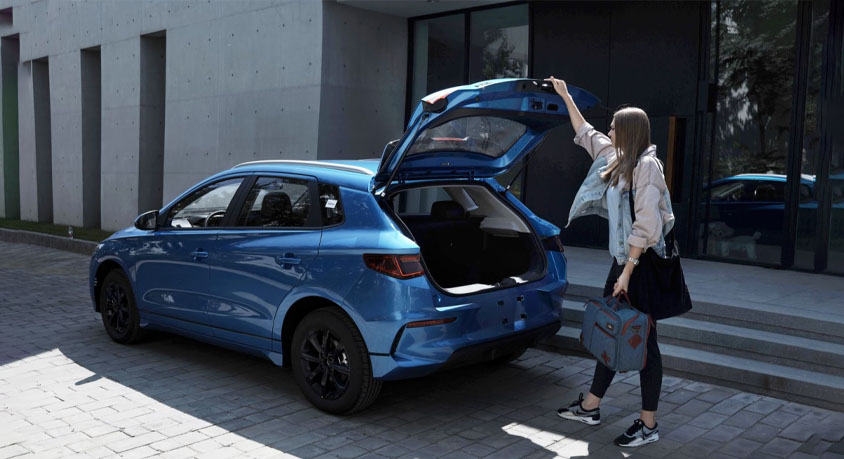
City maneuvering and parking, a major source of driving stress, are where the Fit shines. Its 34.4-foot turning circle (vs. Seltos’s 35.8 feet) lets it U-turn in narrow streets and squeeze into parallel parking spots that leave the Seltos struggling. The Fit’s curb weight (2,522 lbs vs. Seltos’s 2,809 lbs) makes it easier to steer at low speeds, whether navigating tight parking garages or inching through stop-and-go traffic. For new drivers or those anxious about parking, the Fit’s compact size reduces the risk of scrapes—its 160-inch length is 12 inches shorter than the Seltos, making it easier to judge distances. The Seltos’s higher seating position offers better traffic visibility, but this advantage fades in tight spaces, where the Fit’s agility turns parking from a chore into a non-event.
Storage design, tailored to daily needs, reveals the Fit’s thoughtful engineering. Its "Magic Seat" folds flat or upright, creating 52.7 cubic feet of total cargo space—surpassing the Seltos’s 26.6 cubic feet behind the rear seats. The Fit’s front center console features a removable cup holder, a deep phone tray with wireless charging, and a hidden compartment for small items (lipstick, keys, sunglasses)—all within arm’s reach. The Seltos offers more overall cargo space (62.8 cubic feet folded) but lacks the Fit’s small-item organization; its center console is deeper but less accessible, and cup holders are positioned too far back for short drivers. For women who carry purses, snacks, water bottles, and work bags, the Fit’s "right-sized" storage is more useful than the Seltos’s larger but less intuitive spaces.
The verdict hinges on what "easy driving" truly means: For city dwellers, new drivers, or those prioritizing low-stress mobility, the Honda Fit delivers unmatched convenience—effortless entry, minimal blind spots, agile parking, and thoughtful storage—without sacrificing practicality. For women who value the psychological comfort of a taller SUV or need extra cargo space for family trips, the Kia Seltos’s "safe feeling" is valid but comes with maneuvering tradeoffs. Most women choose SUVs based on perceived security, but the data proves the Fit addresses the actual challenges of daily driving—turning stress into confidence. The best car for women isn’t the one that feels safe; it’s the one that makes every drive easier.
latest news

- Dec,28,2025
- What If the Loudest Thing About a 155 mph Car Was Your Heartbeat?
- Automobile
- Most drivers accept road noise as an unavoidable side effect of speed—wind howling past mirror...
- Dec,26,2025
- The Hatchback vs. SUV Debate Is Over. Here’s Who Should Buy Each
- Automobile
- Car buyers often follow trends instead of their daily routines, picking an SUV for its perceived pra...
- Dec,24,2025
- Why the Hot Hatch (Still) Humiliates the Hot SUV
- Automobile
- The performance car market is trapped in a misperception: that taller ride heights and SUV badging c...
- Dec,22,2025
- Most People Think EVs Are Greener—But RAV4 Hybrid vs. ID.3 Truth Shocks
- Automobile
- Eco-conscious car buyers often default to electric vehicles (EVs) as the "greener" choice, assuming ...