It’s Not a Hatchback. It’s Not an SUV. It’s Better.
Family car buyers are trapped in a false dichotomy: choose a hatchback for nimble handling and fuel efficiency, or an SUV for space and off-road capability. This binary choice overlooks the Subaru Outback—a wagon that merges the best of both worlds while fixing their flaws. Dismissed as a "niche" option amid SUV hype, the Outback delivers hatchback-like driving dynamics, SUV-grade practicality, and standard all-wheel drive—all at a price that undercuts most midsize SUVs. By dissecting its performance, space, versatility, and real-world usability, we uncover why wagons like the Outback are the ultimate unrecognized solution for families—and why the hatchback/SUV divide is a marketing illusion.
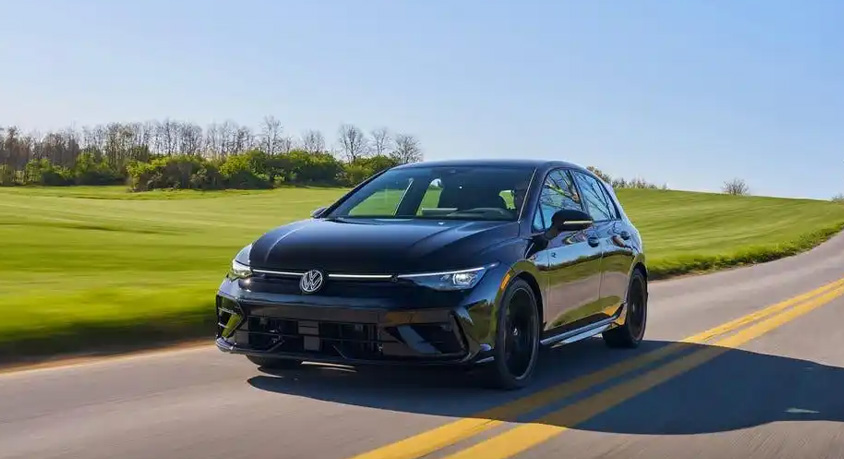
Handling and efficiency, the hatchback’s traditional strengths, are matched (and sometimes exceeded) by the Outback. The Outback’s 2.5L four-cylinder engine returns 26 MPG city/33 MPG highway—nearly identical to the Volkswagen Golf’s 30/38 MPG, but with standard all-wheel drive (a $1,400 option on the Golf). Its lower center of gravity (2.3 inches lower than the Toyota RAV4) eliminates the SUV’s top-heavy feel, delivering crisp cornering and stable highway driving that outclasses the RAV4. Think of the Outback as a "performance bridge": it retains the Golf’s responsive steering and agile maneuvering while adding the ground clearance to handle dirt roads or snow—something the Golf can’t match. For families who refuse to sacrifice driving enjoyment for utility, the Outback’s balance is unrivaled.
Space and versatility, the SUV’s key selling point, are built into the Outback’s design without the usual tradeoffs. The Outback offers 32.5 cubic feet of cargo space behind the rear seats (75.6 with seats folded)—dwarfing the Golf’s 19.9/34.5 cubic feet and nearly matching the RAV4’s 37.6/69.8 cubic feet. Its wide wagon hatch opening simplifies loading bulky items like strollers or coolers, while the flat cargo floor (absent in many SUVs with sloped rear windows) fits larger gear like bikes or camping equipment. Rear legroom (39.5 inches) exceeds both the Golf (35.6 inches) and RAV4 (37.8 inches), ensuring adult passengers stay comfortable on long trips. The Outback’s 8.7 inches of ground clearance—higher than the RAV4’s 8.4 inches—grants it true off-road capability, from gravel driveways to light trails, without the SUV’s increased weight and reduced fuel efficiency.
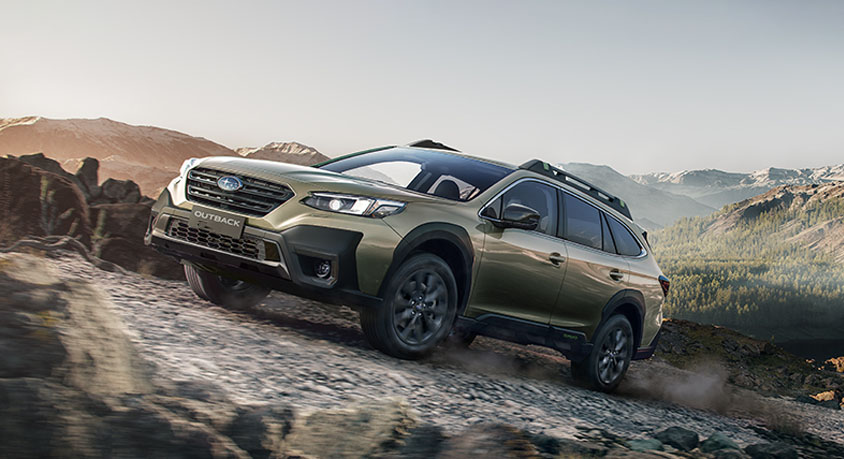
Safety and daily usability further cement the Outback’s advantage for families. Standard Subaru EyeSight driver-assist technology (adaptive cruise control, lane-keep assist, automatic emergency braking) has earned it a 2024 IIHS Top Safety Pick+ rating, matching the RAV4 but outperforming the Golf’s optional safety packages. Its raised seating position (lower than the RAV4, higher than the Golf) offers better visibility than hatchbacks without the SUV’s awkward step-in height for children. The Outback’s symmetrical all-wheel drive system provides year-round confidence in rain, snow, or mud—a critical feature for families in northern climates, and one that remains optional on most hatchbacks and entry-level SUVs.
The Outback’s oversight stems from SUV marketing that equates "tall" with "practical," but data proves wagons deliver superior balance. Hatchbacks lack the space and capability for family adventures; SUVs sacrifice handling and efficiency for height. The Outback rejects this compromise, offering a vehicle that feels at home on city streets, highway cruises, and dirt roads alike. For families who want a car that does everything without excelling at nothing, the Outback isn’t just a niche choice—it’s the smart one.
The verdict is clear: the Subaru Outback outperforms hatchbacks in space and capability, outshines SUVs in handling and efficiency, and delivers uncompromising safety for families. Most people overlook wagons because they’re told to choose between two flawed options, but the Outback proves the middle ground is where true practicality lies. In the battle for the ultimate family car, the wagon isn’t just a contender—it’s the winner.
latest news

- Dec,28,2025
- What If the Loudest Thing About a 155 mph Car Was Your Heartbeat?
- Automobile
- Most drivers accept road noise as an unavoidable side effect of speed—wind howling past mirror...
- Dec,26,2025
- The Hatchback vs. SUV Debate Is Over. Here’s Who Should Buy Each
- Automobile
- Car buyers often follow trends instead of their daily routines, picking an SUV for its perceived pra...
- Dec,24,2025
- Why the Hot Hatch (Still) Humiliates the Hot SUV
- Automobile
- The performance car market is trapped in a misperception: that taller ride heights and SUV badging c...
- Dec,22,2025
- Most People Think EVs Are Greener—But RAV4 Hybrid vs. ID.3 Truth Shocks
- Automobile
- Eco-conscious car buyers often default to electric vehicles (EVs) as the "greener" choice, assuming ...