Do Mach-E GT & Model Y Redefine "SUV as Sports Car"?
For decades, "SUV" and "sports car" existed in separate universes—one for utility, the other for thrill. Then electric technology arrived, armed with instant torque and chassis physics that defied conventional wisdom. The Ford Mustang Mach-E GT and Tesla Model Y Performance aren’t just fast SUVs; they’re proof that electrification can rewrite the rules of driving engagement. This isn’t about mimicking fuel sports cars—it’s about creating a new kind of performance: silent yet savage, practical yet precise. To understand how they redefine "SUV as sports car," we must unpack the electric advantages that erase old compromises, and the distinct personalities that set these two speedsters apart.
Instant torque is the foundation of their revolution, a phenomenon that feels almost supernatural compared to fuel cars. The Mach-E GT cranks out 480 hp and 634 lb-ft of torque, launching to 60 mph in 3.5 seconds. The Model Y Performance delivers 456 hp and 497 lb-ft, hitting 60 mph in 3.7 seconds. But numbers don’t capture the sensation: press the accelerator, and there’s zero turbo lag, zero gear-shift delay—just an immediate, linear surge of power that pins you to the seat like a rocket launch. It’s the difference between lighting a fuse and flipping a switch; electric motors deliver 100% of their torque at 0 rpm, turning every merge or backroad sprint into a visceral event. For SUVs that weigh 4,500+ pounds, this responsiveness isn’t just impressive—it’s transformative, making them feel lighter and more agile than their curb weights suggest.
Low center of gravity amplifies this agility, thanks to electric vehicles’ fundamental design. Both the Mach-E GT and Model Y Performance tuck their battery packs flat beneath the floor, creating a center of gravity 4-6 inches lower than traditional fuel SUVs—closer to a Porsche Cayman than a Toyota RAV4. This "battery ballast" acts like a gymnast’s core, minimizing body roll and keeping the vehicles planted through tight corners. The Mach-E GT’s independent rear suspension and MagneRide adaptive dampers sharpen this further, while the Model Y’s rigid battery structure and dual-motor all-wheel drive deliver surefooted stability. On winding roads, neither feels like a top-heavy SUV; they carve turns with precision, their low-slung mass clinging to the pavement as if glued down. It’s physics reimagined—utility without the usual dynamic penalties.
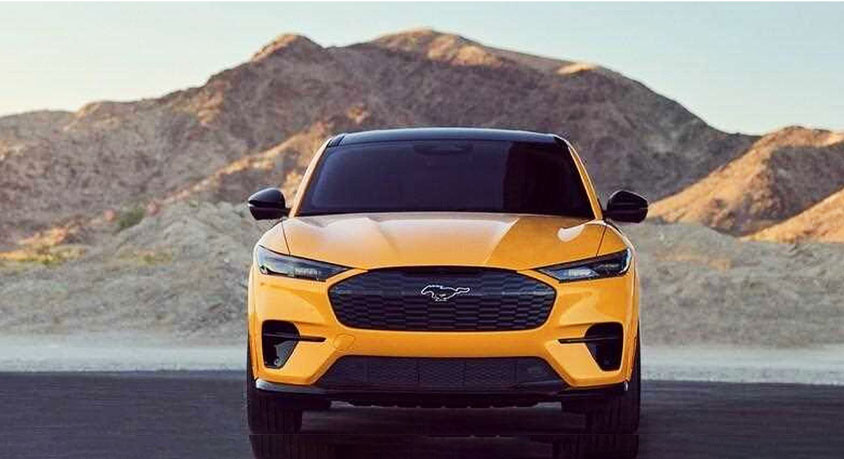
Yet their personalities diverge sharply, reflecting two visions of electric performance. The Mach-E GT wears its Mustang heritage proudly: its "Unbridled Extend" track mode sharpens throttle response, stiffens dampers, and even amplifies a synthetic "engine note" that echoes Mustang’s V8 rumble—an intentional nod to driving tradition. Its steering is communicative, transmitting road texture to the driver’s hands, and its suspension balances sportiness with compliance, making it engaging on backroads without punishing daily commutes. The Model Y Performance, by contrast, embraces futurism: it’s minimalist, efficient, and almost clinical in its speed. Its steering is precise but muted, prioritizing stability over road feel, and its acceleration is seamless to the point of being surreal—no drama, just relentless forward motion. It doesn’t try to mimic fuel cars; it leans into electric’s strengths: instant response, silent operation, and algorithmic precision.
This split defines their appeal. The Mach-E GT is for enthusiasts who want electric performance without losing the "connection" of a sports car—who crave engagement, nostalgia, and a hint of Mustang’s rebellious spirit. The Model Y Performance caters to forward-thinkers who see performance as efficiency in action—who value speed paired with simplicity, tech integration, and the quiet confidence of futurism. Both deliver on the promise of an SUV that drives like a sports car, but they do so through different lenses: one honors the past while embracing the future, the other abandons tradition to redefine what performance can be.
Electrification hasn’t just made SUVs fast—it’s redefined what "fast" feels like. The Mach-E GT and Model Y Performance prove that utility and thrill don’t have to compete; they can coexist through smart engineering and distinct philosophical choices. For drivers, the question isn’t which is "better," but which vision aligns with their love of driving: the visceral, heritage-infused thrill of the Mach-E GT, or the sleek, algorithm-driven precision of the Model Y Performance. Either way, one truth is clear: electric technology has blurred the line between SUV and sports car—and there’s no going back.
latest news

- Dec,28,2025
- What If the Loudest Thing About a 155 mph Car Was Your Heartbeat?
- Automobile
- Most drivers accept road noise as an unavoidable side effect of speed—wind howling past mirror...
- Dec,26,2025
- The Hatchback vs. SUV Debate Is Over. Here’s Who Should Buy Each
- Automobile
- Car buyers often follow trends instead of their daily routines, picking an SUV for its perceived pra...
- Dec,24,2025
- Why the Hot Hatch (Still) Humiliates the Hot SUV
- Automobile
- The performance car market is trapped in a misperception: that taller ride heights and SUV badging c...
- Dec,22,2025
- Most People Think EVs Are Greener—But RAV4 Hybrid vs. ID.3 Truth Shocks
- Automobile
- Eco-conscious car buyers often default to electric vehicles (EVs) as the "greener" choice, assuming ...